
Oral Histories
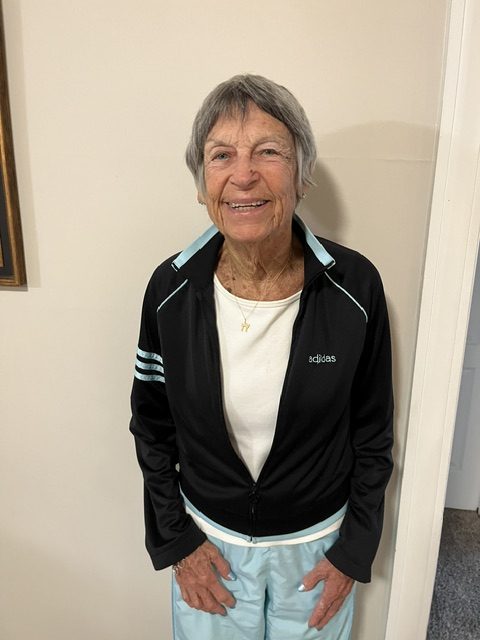
Joan Folpe
INTERVIEWER: The date is May 25th, 2026. This is Bill Cohen with the Columbus Jewish Historical Society and we’re at the home of Joan Folpe and Joan, tell us, how, how far back can you, can you trace any relatives, grandparents, perhaps even further back? Do you know anything about that?
FOLPE: I know my grandparents. My grandmother, all my grandparents came from Europe. My grandfather, Binstein, my mother’s father was a rabbi, and he had a big family in Poland and they were, evidently, very, a very big Jewish rabbinical family, and my grandmother’s family were merchants, so the shidduch was between the rabbi’s family and the merchant’s family, and….
INTERVIEWER: When you say the shidduch, you mean the arranged marriage.
FOLPE: The arranged marriage between my grandparents and they met, my aunt used to say they met under the chuppah and my grandfather was this tall very good-looking man, of course, with a beard and everything and my grandmother was short and round and he thought she was the greatest thing ever. After she passed away, they tried to fix him up and he wasn’t interested because nobody was like his wife. They, they, obviously, they lived in Poland, I’m, I think. I was raised during the Forties and they, everything was in Yiddish, which I didn’t understand, all the conversations, and then, when the War started nobody talked about, nobody talked about Poland because nobody was left there and so, it was, they had lost everything. They lost all their family and everything during the Holocaust, so my family didn’t talk about, they didn’t, they just didn’t talk about it so I don’t, I don’t know much, but I do know that my grandmother’s family were in the leather business and so, they decided to move to Omaha because the stockyards are in Omaha, so the leather, they figured it would be a really good thing for their leather business so her family moved to Omaha and my grandmother was very unhappy. She was the oldest and the first that got married and so the whole family was gone and she was really unhappy so she talked my grandfather into coming for a visit. He didn’t want to come but for Pearl, he’d do anything, so he finally, he got on the boat to come to America and after the boat left, my grandmother who had two little ones and one in her tummy, sold everything that they had and got on the boat with the older children and pregnant and with the babies and came to Omaha. How she got to Omaha, I have no idea, but she got to Omaha and she said, “Hi. Here we are” and he was stuck, because it was one thing to get there, it was then another thing to go back, so that’s how they got to this country and they stayed and my grandfather was welcomed at a job at the slaughterhouse for, for, ‘cause he was a shochet and he opened a butcher shop and they weren’t rich but they had enough, course they had enough to feed their kids because there was no refrigeration, so they had a lot of meat and stuff in the house and my mother, when we went out to dinner, always ordered fish. She’d had enough meat when she was growing up and she also remembered that they had all this meat left over which they had to use so her family was always there. My grandmother’s family was there for dinner lots of times and for, for me, it was kind of a great memory. For her it was not, so that’s how they got… My other grandfather I know very little about. He was a student. When he passed away, they praised him as a student. He was a nice little man who had a pushcart and who had boys and the two oldest boys sold newspapers. They were out on the street ‘cause there was no money, and…
INTERVIEWER: This was in the United States?
FOLPE: This was in Omaha.
INTERVIEWER: In Omaha.
FOLPE: They, they were out on the street raising money. When I was a little girl, my oldest uncle had a grocery store. My dad had this great idea. With one of his friends, they were working at the post office and they, they realized that when you went to the movies there was a movie coming but nobody knew about the movie that was coming, so, I don’t know how they did it but they managed to get enough money to set up a company called National Screen, and National Screen makes, made all those, I’m trying to remember what they call it, those things when you go to the movie and it says coming features…
INTERVIEWER: A preview.
FOLPE: The preview. They called them something else but, so my dad in the Twenties was comfortable because that’s when the movies, you know, were a big deal.
INTERVIEWER: This was a long time before you came along or a little bit before you came along.
FOLPE: This was before he was married.
INTERVIEWER: Okay.
FOLPE: They were very young men. My dad was married when he was in his late twenties.
INTERVIEWER: And your father’s name was…?
FOLPE: Sokolof, S-o-k-o-l-o-f. Iz Sokolof.
INTERVIEWER: First name?
FOLPE: Iz. I-z-a-d-o-r-e, Izadore.
INTERVIEWER: Izadore. Izadore Sokolof.
FOLPE: Ah-huh.
INTERVIEWER: Okay and he was born in, in Omaha?
FOLPE: Oh, no. He was born in Europe.
INTERVIEWER: Your father was born in Europe.
FOLPE: Yes, and my mother wanted to go on a cruise and my father used to say, “I was on a boat once. I am never getting back on another boat.” It must have been a horrible, horrible trip from Europe to the United States, and he was a little boy and he still remembered it.
INTERVIEWER: Was he born in Poland?
FOLPE: Yes, and he, so, when he was a little boy, his father had a pushcart and he sold newspapers and when he, he wouldn’t eat hamburgers. When, he, he would never eat hamburgers and I didn’t know why and then I found out it was because when he was selling newspapers, his spot was on the corner in front of a hamburger place and in the middle of winter it was cold, but the hamburger place wouldn’t allow him in unless he bought a hamburger, so when he grew up, he never wanted another hamburger.
INTERVIEWER: Emotionally…
FOLPE: Uh-huh.
INTERVIEWER: …it scarred him against hamburgers.
INTERVIEWER: Yeah, oh yes, cause all he, he associated being cold and miserable and being out there trying to sell newspapers and they wouldn’t, they wouldn’t let him come in unless he patronized them.
INTERVIEWER: So, your father was Izadore Sokolof…
FOLPE: Um-hm.
INTERVIEWER: And your mother, her name?
FOLPE: Sophie, S-o-p-h-i-e.
INTERVIEWER: And her maiden name?
FOLPE: Sokolof, no, her maiden name was Binstein., B-i-n-s-t-e-i-n.
INTERVIEWER: Binstein, and do you know anything about her roots? Where was she born? Where did she come from?
FOLPE: I’m assuming Poland. That’s all I know. They didn’t talk about it or if they did talk about it, they talked about it in Yiddish and I do not have an ear for languages and I never learned. My sister was pretty good at picking it up but I, you know, whenever they wanted to talk about something that they didn’t want us to hear, they spoke in Yiddish.
INTERVIEWER: But otherwise, they spoke English.
FOLPE: Oh yeah, they spoke very good English because they came here as children and they went to public schools and they both graduated, and they graduated from high school but there was no money to go to college, so…
INTERVIEWER: So, both your mother and father were born in Poland?
FOLPE: I think so, yeah.
INTERVIEWER: And when you say that the family didn’t talk much in the Forties about, and maybe Fifties, about what had happened with the Holocaust, did you have relatives that were killed?
FOLPE: No. No. Well, I did but I didn’t know them, my grandfather’s family because they were, supposedly, I’m just telling you what I was told. My grandfather’s family who was the leaders in the Jewish community and the shul and everything in Poland, so when the Nazis came in, they just took them out to the public square and shot them all.
INTERVIEWER: But your grandfather left before that.
FOLPE: Yeah because, see, actually, my grandmother saved his life because of the trickery of going to, of coming to the United States for a visit.
INTERVIEWER: That’s where he wound up staying.
FOLPE: Yeah. They stayed.
INTERVIEWER: He planned to go back.
FOLPE: Oh, my mother said every time they had an argument, he would say, “I can go back any time I want to.” You know, if whatever happened isn’t worked out. “I don’t have to stay. I’m here for a visit.”
INTERVIEWER: But if he had gone back, he probably would have been killed.
FOLPE: Of course, he would have been. I mean, it’s like besheirt.
INTERVIEWER: Besheirt. It was meant to be.
FOLPE: Kind of, yeah. Um-hm.
INTERVIEWER: Fate.
FOLPE: What a story.
FOLPE: Isn’t that, isn’t that a story? And my mother said she sold, my grandmother sold everything that they could sell and take what they could carry and took them all on the ship. Can you imagine doing that? And she was pregnant, and take them on this ship and there were, there were three, there were two children and, let’s see, my mother was little. She had, there were three children, little ones, and one in her tummy and she sold everything that she could sell. I mean, I have a few things but most of the stuff she sold and to buy these tickets to get on the ship, but how she got from New York to Omaha, I have no idea, with children and everything. She must have been, she, you know, when, when I met her, she was my bubbe and I can’t imagine her as a young woman but my grandfather just adored her and, which is interesting because when you meet somebody under the chuppah, it’s, you don’t have this long romantic thing that Americans have now.
INTERVIEWER: Any idea when they came, how much before the Nazi era your grandparents came to the United States?
FOLPE: Well, if they did it was either maybe the beginning of the Twenties or a little before that.
INTERVIEWER: Okay, so perhaps the Nazis really hadn’t even come to power yet.
FOLPE: No. No. It wasn’t anything like that. This was just that she wanted to be with her family and it was just one of those things. Yeah, it was way before that.
INTERVIEWER: So, you were born what year?
FOLPE: ‘Thirty-four.
INTERVIEWER: And this was in Omaha.
FOLPE: Mm-hm.
INTERVIEWER: What do you remember about your childhood years in Omaha?
FOLPE: They were, they were, they were pretty nice. We had, we lived in a, we lived in a big house, when I was little, with a big porch. I remember the porch and my sister was born when I was four. I told my mother, she promised me a little boy, a boy and she also promised me a dog, and she didn’t bring me home either of those.
INTERVIEWER: This was, the Depression was still going on, even when you were five years old, 1939.
FOLPE: Yeah, but my dad’s business was the movie business and that’s the big deal. You know, that’s when the movies were really a big deal, so I was lucky that that’s the business he was in.
INTERVIEWER: The previews. That was his main thing.
FOLPE: No, he did…
INTERVIEWER: Oh.
FOLPE: He, yeah, he did the previews. There had never been any previews before, so they came, he and Aaron came up with this idea how. The other thing is that nobody ever discussed it with me, so I have no idea how they got backing for it ‘cause they didn’t have any money. They, he didn’t even have, he didn’t even have any money to go to college, my dad. He used to, my mother said he used to tutor other boys so that they could get into college, but they didn’t have any money. He couldn’t go to college. He went to work for the Post Office.
INTERVIEWER: So, when you say your father was in the movie business, he did the previews.
FOLPE: Mm-hm.
INTERVIEWER: Was there something else he did?
FOLPE: No. They came up with this idea for previews.
INTERVIEWER: And that, that was his living…
FOLPE: That was his living.
INTERVIEWER: …and it was a pretty good living because you didn’t suffer a while lot during the Depression.
FOLPE: No. We were fine during the Depression.
INTERVIEWER: Do you remember? Did you go to synagogue? Did you go to Sunday School?
FOLPE: Oh, yes. Oh, yes. Okay. When I was young, because we had, I assumed they had always been members of the Orthodox shul because that’s where my grandfathers went, but when I was a little girl, a group, a group of families got together whose parents had all, were all part of the Orthodox group in Omaha, and they, they didn’t, they wanted, they wanted their daughters to be as educated as their sons. They didn’t, they, they thought that was really important. They set up, they were one of the first Conservative synagogues in the country and they got a rabbi whose name was Goldstein who then went to Philadelphia afterwards who was a very, I understand, a very big rabbi there, but he, they told him that they wanted their daughters to have the same education as the boys and the same bnei mitzvah, the bar mitzvahs, the whole bit, and so Rabbi Goldstein was great and I went to cheder from the time I was in fourth grade…
INTERVIEWER: Cheder meaning…
FOLPE: Hebrew School.
INTERVIEWER: Hebrew School,
FOLPE: …until I was bat mitzvah in seventh grade.
INTERVIEWER: You were bat mitzvahed in what year, approximately?
FOLPE: Well, I was born in ‘Thirty-four, so, Forty-four, Forty-seven, something like that.
INTERVIEWER: 1947, you had a bat mitzvah. That must have been pretty rare back then.
FOLPE: Yeah, like, like, well, it wasn’t, it wasn’t at Beth-El because that’s, I started Hebrew School when I was, when I was in second grade, I guess, or third grade and I went ‘til all through seventh grade for, so, at Temple, at Beth-El, that’s the way it was.
INTERVIEWER: Wow.
FOLPE: So, I wasn’t, I wasn’t unusual because every, all my, any of my friends that were at Temple Israel were all bar and bat mitzvah too, you know.
INTERVIEWER: Even the girls.
FOLPE: It was the same service. We led the service. We read Torah. We did haftarah. We did, we learned trope which I’ve forgotten, but, and I can’t sing, and I, I, when I was a little girl, I was the first child so my mother wanted, you know, Jewish mothers, ’she’s going to be everything.’ She sent me for singing lessons and the singing teacher called her up and said, “Mrs. Sokolof, save your money.” Anyway, so, but I did, I did get through the trope and the singing and everything else and I, and I led the service.
INTERVIEWER: Had your parents decided to stay in the Orthodox tradition, the Jewish leaders would have said, “No. The Jewish girls do not have a bat mitzvah…”
FOLPE: [overlapping] Oh, they were still in the balconies. They were still in the balconies.
INTERVIEWER: Separated.
FOLPE: …but these, these which I didn’t realize, of course, at the time, but these new young members that formed this synagogue all came from Orthodox, from Orthodox, not just Orthodox, they were mostly, parents, almost a hundred percent came from Europe, so they were all, you know that kind of Orthodox, and they wanted, this was a new country. They wanted their daughters to have the same kind of education, and they found, they found this great rabbi who agreed with them, and so, well, and so, when I came to Columbus, we had this discussion ‘cause Norm was already an active member of Temple Israel.
INTERVIEWER: Your husband.
FOLPE: Yes, and I said, “Well, I want to belong to the Conservative synagogue.” He said, “Well, then, once we get situated, if that’s what you want, we’ll have a dual membership.” So, then when the girls were four years old, we were invited to a bat mitzvah at Tifereth and I went through this whole thing with the girls “and she’s going to read Torah and she’s going to do this, and she’s gonna’…” and we’re sitting there and my daughters are sitting there, “When’s she gonna’ read Torah? Mom, when’s she gonna’ read Torah?” so that’s when I said, I said, “No. Well, I guess we’re not going to belong to the Conservative synagogue, because I want you to have, I want my daughters to be as educated as anybody else,” and so.
INTERVIEWER: Wait, are you, I don’t quite understand. Are you saying that at Tifereth Israel there was not as much equality as you wanted?
FOLPE: Oh, no. There wasn’t any equality, not then at all.
INTERVIEWER: Now what years would that have been approximately?
FOLPE: Oh, Fifty-eight, Sixties. The early Sixties.
INTERVIEWER: In the early Sixties, the girls did not…
FOLPE: Well, she had a bat mitzvah. She was called up and, Rabbi Zelizer. You didn’t know Rabbi Zelizer.
INTERVIEWER: I did.
FOLPE: You did know Rabbi Zelizer? He was great, anyway, but he said, “Who would ever have believed I would ever have a girl on my pulpit?” cause Rabbi Zelizer was Rabbi Zelizer, so.
INTERVIEWER: You’re saying even that was new to him.
FOLPE: Yes, so he had, and they had this great education system, the Melton system, so, they, the, she came up and she did a little part of the Friday night service and that was it, so.
INTERVIEWER: I see, so what you’re saying is even though Tifereth Israel…
FOLPE: Then.
INTERVIEWER: …did start to have some girls with bat mitzvahs, they didn’t give them as much a responsibility…
FOLPE: No.
INTERVIEWER: …as the boys.
FOLPE: …and it wasn’t Shabbat morning. I think it was a Friday night. Anyway,
INTERVIEWER: So, you wanted more for your daughters.
FOLPE: I wanted more, so, I came home and I said to Eddy Kiner who was the rabbi then, I said…
INTERVIEWER: …at Temple Israel.
FOLPE: I said, “This has got to stop,” so that’s when we started the Hebrew school at the temple and the girls would have bat mitzvahs.
INTERVIEWER: At Temple Israel…
FOLPE: Yes. At Temple Israel.
INTERVIEWER: …not at Tifereth Israel.
FOLPE: No. No. I, we were never, Norm had been a member of Temple Israel when we got married, an active member already, so.
INTERVIEWER: Let’s go back again to your childhood.
FOLPE: Okay. I’m sorry I got…
INTERVIEWER: That’s okay. No problem.
FOLPE: Anyway, so I went to Hebrew school from the time I was seven years old.
INTERVIEWER: Wow, and, but you went to public regular school.
FOLPE: Oh, yeah. This is just Hebrew school.
INTERVIEWER: Right, so, tell us. How did the, how did Jews and non-Jews get along or not get along in your school years, in public school?
FOLPE: We got along. We got along fine. I mean, whether I was naïve or not, I don’t know, but in high school, I went to Central High School which was where all the Jews went, so there were a lot of Jews there. We were, and the high school, was across from the Jewish Center so after high school, we all went over to the Jewish Center to socialize and then, in Omaha, in high school, they had what they called The Round Table and there were all these high school organizations that met at the Jewish Center, like, Counsilettes and AZA and there were two or three AZA groups and Bnai Brith and there, and we did a lot of things together, the groups, and that was your big social life.
INTERVIEWER: And were most of your friends at that time, were most of them Jewish or non-Jewish or a mix?
FOLPE: My friends-friends were Jewish. My acquaintances, I had a lot of acquaintances I was very friendly with but, my friends were all Jewish.
INTERVIEWER: Did that just happen organically or was there some guidance by your parents?
FOLPE: Yeah, well there was guidance by my parents, but there was also I think, because the Center was across the street, and that’s where you were all the time, that that’s what, and at that time, Jewish girls, nice Jewish girls only dated Jewish boys. That didn’t apply to Jewish boys, of course.
INTERVIEWER: Tell me about that.
FOLPE: Well, Jewish boys could date anyone they wanted but nice Jewish girls didn’t date non-Jewish boys because then the Jewish boys wouldn’t date them, get that one.
INTERVIEWER: So, you’re saying there was a double standard.
FOLPE: Oh, definitely.
INTERVIEWER: A double standard within the Jewish community.
FOLPE: Mm-hm. I mean there was a lot of pressure…
INTERVIEWER: …on the girls.
FOLPE: …on the girls and the parents didn’t want their daughters dating non-Jewish boys either but there was a lot of social going on in the high school community because the high school was right across the street and all the Jewish kids went to Central High School because it was the academic high school, but in my parents’ era, the Jewish kids went to Tech High School because Tech High School, taught all, taught a lot of technical things that kids might need because they graduated high school and had to get jobs, whereas, Jewish kids in the Fifties, like me, were expected to go to college, so you were more academic, but my mother made sure that I took typing and short-hand so I could get a job if I needed one, which was really nice because when I was in college, I took all my notes in shorthand. Now people don’t even know what shorthand is, but it was really great in college and then when I transcribed my notes, I got a second thing, so it was really good for academics.
INTERVIEWER: So, you graduated high school in Omaha…
FOLPE: Um-hm.
INTERVIEWER: And what year was that?
FOLPE: ‘Fifty-one.
INTERVIEWER: ‘Fifty-one, and then you went on to college.
FOLPE: Then I went on to college. I wanted to go to a big school. My mother did not want me to go to a big school, so I went to the University of Iowa which was a really nice school. It was a really great school, great school academically, and everything else. The problem was socially, at Iowa, is that because it was small, the college kids, Jewish college kids tended to get, I’m thinking hooked up, but I don’t mean that, but get together right away, so by the end of your freshman year or your sophomore year, you are already going with somebody or pinned or whatever…
INTERVIEWER: …engaged.
FOLPE: …engaged, you know, or committed or something.
INTERVIEWER: Jewish couples.
FOLPE: Yeah, they were Jewish couples, but, so I found this really great freshman from Spencer, Iowa, who was a great guy who was on the football team and my mother was appalled.
INTERVIEWER: Because?
FOLPE: Because he was a freshman and, and she didn’t want me making a commitment like that, so, I went back. So, she let me go back to school my sophomore year but she wasn’t really happy about it. Meanwhile, my grades were good, you know, and I was getting active on campus and everything, but I had always wanted to go to a big school. I just went to, my choice was Iowa because it was a smaller school which it was, at that time, and, and my mother wanted me there, but, then, after I got pinned to the football player, she wasn’t, she didn’t care if I went to a bigger school, so I was so madly in love that I applied to Ohio State and Illinois and at that time, the big problem of out-staters getting in to schools was not academics, was housing. There were still vets coming back and everything else and they were using a lot of the housing, so I got into Ohio State and there was an old veterans housing unit that they were putting students in. It was kind-of off-campus, but the big deal was getting in because I was accepted at Illinois and a couple other schools, but they couldn’t get housing for me, so I came to Ohio State my junior year.
INTERVIEWER: Now let me understand better. You were in love with this…
FOLPE: Oh, this fellow freshman. We’re seventeen years old.
INTERVIEWER: …and he was Jewish…
FOLPE: Mm-hm.
INTERVIEWER: …so there was no problem with that…
FOLPE: Un-uhn.
INTERVIEWER: …but your mother was a little concerned because you were making a commitment so early.
FOLPE: Mm-hm.
INTERVIEWER: Why was that a problem? Was she worried getting married too early would…
FOLPE: Yes. She just thought that I was seventeen years old and too young to do that and so…anyway, as I look back, I must have been madly in love because I went off to Ohio State. I just thought that was going to be the greatest. It was.
INTERVIEWER: Now, I’m a little unclear. You were in love with this boy in Iowa…
FOLPE: Mm-hm.
INTERVIEWER: …at Iowa, but you decided to leave him and the relationship and go to Ohio State?
FOLPE: Well, obviously, I wasn’t madly in love. You know, it was like, in Iowa, ‘cause the size of the Jewish population and everybody knew everybody, that you kind of got paired off your freshman year and…
INTERVIEWER: You got what?
FOLPE: Paired off…
INTERVIEWER: Paired off.
FOLPE: …so, you know, it was like, he was good-looking. He was football player. He was nice, you know.
INTERVIEWER: And he was Jewish.
FOLPE: And he was Jewish and he had a nice family, but, you know, my mother just thought I was, too young, and my mother said, “You know, if you still feel that way after a year away, then fine, but this is not…” but I had always wanted to go to a big school. Here was an opportunity. I was accepted at Ohio State and Illinois and I couldn’t get housing at Illinois, so I came to Ohio State.
INTERVIEWER: For your junior year.
FOLPE: My junior year and I loved it and not only that, I was dating a boy in Omaha who was in law school who was older and he was from Cincinnati and I, I was in a sorority at Iowa and so he said, “Just go over to the sorority house and knock on the door and tell them you’re a Sigma Delta Tau from Iowa,” and I said, “You’re kidding.” He said, “No. That’s, just go ahead. What can you lose?”
INTERVIEWER: He was saying, ‘go to the same sorority but at Ohio State and they’ll welcome you.’
FOLPE: Yeah. Yeah, so, so, I went over and I knocked on the door and I said, “Hi, I’m Joan Sokolof from Omaha, Nebraska and I’m an SDT from Iowa,” and they said, “Oh, we have, we have an opening in the house. You want to move in?” and I said, “Sure.” So, you know, I was lucky, so, I moved in and, at that time, you could break contracts, so I broke the contract with the University at Ohio, and at the University housing and I moved in and they were really nice and I was part of the Jewish community. I got to meet all these people and it was really great. The girls were wonderful and everybody, they talk about how nasty sororities are but that wasn’t my experience. I’m not saying it’s not other girls’ experience but it wasn’t my experience, and so, that was great, so I was a part of Ohio State.
INTERVIEWER: And what was your major?
FOLPE: Education.
INTERVIEWER: And did you graduate?
FOLPE: Oh yes, I graduated.
INTERVIEWER: And the year was?
FOLPE: ‘Fifty-Five.
INTERVIEWER: And anything, does anything stand out in terms of the Jewish community? You, of course, you were in this Jewish sorority.
FOLPE: I was in this Jewish sorority, so I was part of Hillel, because everybody in sorority had to be part of a Hillel.
INTERVIEWER: The Hillel on 46 East Sixteenth Avenue.
FOLPE: Yeah.
INTERVIEWER: Any memories of that place or…?
FOLPE: No, I don’t. I don’t, but the, the wife, I’m trying to remember, the wife of the former Hillel director, I think he’s the one that, that was killed in the War, came to speak to us, to the sorority and we had, contrary to, my experience in Greek was not what some people talk about Greek so I had a really nice experience. There were girls in the house that, I was, that were pleasant to me but nothing else and there were girls in the house that were friends and they, they were helpful, and, but it was, it was, I can, even for my granddaughters think it’s hysterical. My granddaughter thinks it’s hysterical when I talk about what it was like being, being in university then. You couldn’t wear, if you were in a sorority, you couldn’t wear jeans on campus. You could wear jeans in the house but you couldn’t wear, and if you came downstairs you had to be dressed a certain way, and you had hours. You know, when I visited my daughter at the University of Texas, they all had keys to the house. I thought that was hysterical, because we had hours and the house-mother stood there when we were supposed to be in and made sure we were all there and locked the door at midnight or whenever it was.
INTERVIEWER: No boys could visit the sorority house.
FOLPE: Oh, no, I mean, not after hours.
INTERVIEWER: What time did you have to be in? Do you remember?
FOLPE: I don’t even remember. I think it was, like, midnight on weekends and I don’t remember.
INTERVIEWER: Probably earlier weekdays.
FOLPE: …earlier weekdays.
INTERVIEWER: So, you graduated in ‘Fifty-Five. Then what happened?
FOLPE: I got married.
INTERVIEWER: When was that?
FOLPE: I got married in August, in July, July 31st.
INTERVIEWER: Oh, so somewhere in there you met your husband, Norman.
FOLPE: Yeah, my senior year.
INTERVIEWER: When was that?
FOLPE: My senior year, in the Fall. My roommate fixed me up with him. He was a Columbus boy. There was, there were college boys and Columbus boys and he was a Columbus boy.
INTERVIEWER: And was he going to Ohio State at the time?
FOLPE: No, he was, he was, he lived in Columbus. He was older. He was eight years older than me.
INTERVIEWER: That was Norman Folpe.
FOLPE: Mm-hm.
INTERVIEWER: And when you met him, was he, he was working?
FOLPE: Oh, yes.
INTERVIEWER: What did he do?
FOLPE: He was a realtor and he, he, he, um, my husband had an interesting background, but he, it was real important to him to be part of Columbus, and so, he was an active member and he was president of the Junior Chamber of Commerce which was a group that, I’m trying to think of the word, that did, helped, helped in the city with all kinds of things, volunteers. He did all kinds of volunteer work and he was an active member of Temple Israel, and at that time and he, one of the girls in the house was a friend of his and she fixed me up with him.
INTERVIEWER: And it sounds like it was pretty instant love.
FOLPE: Oh, well, I was coughing. I couldn’t get rid of this cough so I finally went, one of.” the, one of the girls in the house, her father was a doctor so I made an appointment to go see him and he said, “What are you doing here? You’ve got a whole university,” but we didn’t tend to trust the University with a lot of that stuff then and so, he sent me to the hospital because I had pneumonia. So, I moved, I got checked in to the hospital and they put me in this room and there’s this beautiful array of flowers there and I said to this intern, really cute intern. I said to this intern, “How nice that they send you flowers when you check in,” and he looked at me like I was crazy. He said, “That is not from the hospital.” I looked down and found the card. It was from Norman.
INTERVIEWER: Your boyfriend Norman sent you these flowers.
FOLPE: Yeah, so, that was funny.
INTERVIEWER: That was pretty early in your relationship?
FOLPE: Yeah, we just had one date.
INTERVIEWER: Wow.
FOLPE: But was funny when the intern looked at me like ‘Uh, I’m going to have to deal with this.’
INTERVIEWER: He sent you flowers after just one date.
FOLPE: Yes. It was very romantic.
INTERVIEWER: Wow. And you got married just a few months later?
FOLPE: Got married in June. That was in the Fall.
INTERVIEWER: So, less than a year later, you were married.
FOLPE: Well, yeah, graduated college and got married because that’s what you did in those days. Now, you don’t do that. The girls are lucky, the girls, if they decide to get married when they’re thirty, I don’t know.
INTERVIEWER: Were your parents happy with your choice?
FOLPE: Yeah. They liked him.
INTERVIEWER: So, tell us about your early years with Norman Folpe. Where did you live?
FOLPE: We lived in Columbus. We’ve always lived in Columbus.
INTERVIEWER: What was your address?
FOLPE: We lived in the Virginia Lee Apartments.
INTERVIEWER: In Eastmoor.
FOLPE: Yeah, and there were a lot of Jewish couples there, young couples in Virginia Lee and he already was active at Temple Israel and so, we were members of Temple Israel, and this is really interesting. At that time, Columbus in the Jewish community, was still what you would call Old Columbus. The families that were, the women, not so much the men, but, the women weren’t so accepting. We were the newcomers. I mean they labeled all and at that time, in the Fifties, Columbus was really growing. That’s when they were really growing, and but, I don’t think Tifereth Israel was any different. What the other shuls were, I don’t know, ‘cause I didn’t…but we were, the women were the newcomers. The sisterhoods were controlled. They really were. They were controlled by old families, you know.
INTERVIEWER: Long-term traditional families from Columbus.
FOLPE: Yeah. Yeah.
INTERVIEWER: Okay and you were from Omaha. You were considered a newcomer.
FOLPE: I was considered a newcomer. I, I had it a little easier because Norm was already an active member, but a lot of my friends who were not from Columbus, had it harder because their husbands were the same newcomers as they were, but at that time, the nice thing was that there was an active Sisterhood or an active Brotherhood, so if you were new and young, it was, you could get in and meet people and do things. Now, those entities are gone. There is no more Sisterhood or Brotherhood.
INTERVIEWER: But back then you’re talking about the Sisterhood and Brotherhood at Tifereth Israel.
FOLPE: No, Temple Isreal, but there was, Tifereth was a lot of the same things.
INTERVIEWER: Temple Israel. Okay, so, did you join the Sisterhood?
FOLPE: Oh, yes. I joined the Sisterhood right away and I was a little luckier because Norm was already active but some of my friends who were maybe even a few years older than me, had a difficult time becoming…we wanted to become…a lot of us had jobs but we wanted to become part of the synagogue. To do that, you know, you wanted to be, to do something to be part of it.
INTERVIEWER: You wanted to contribute.
FOLPE: Yeah, and so, but, I, so I was teaching and then, everybody was very nice to me, so I, I, I became part of the Sisterhood.
INTERVIEWER: Do you remember what kinds of things you were active in?
FOLPE: Oh. Oh. I did scutwork, you know, the telephone committee, which was the worst, but everybody had, at that time everybody was called for everything, so I was on the telephone committee and I helped out in the kitchen, you know, with, there was always, the Sisterhood were always cooking for everything and so I helped out there, and oh, I became a temple guide for people who, you know, other groups that came into the temple on Friday night or they made arrangements for their schools, anyway, and then, I, and I was teaching school in the meantime, so I was busy all the time and then Eddy, oh, I’m sorry, then Eddy, then I started teaching religious school, ‘cause…
INTERVIEWER: Was that on Sunday?
FOLPE: That was on Sunday. That was fun and then, eventually, what happened, then the girls came and eventually what happened is that Eddy Kiner called me in to the office and said he needed an administrator for the school, so, so, took that over.
INTERVIEWER: Eddy Kiner was the rabbi.
FOLPE: Yeah, he was the rabbi.
INTERVIEWER: And you became the administrator of the…
FOLPE: Of the school, yeah.
INTERVIEWER: Wow. Now you were teaching, at this point you were teaching in the public schools?
FOLPE: Well, by that time, my girls, I had had my girls. There was a program in the Columbus Public Schools for tutoring for kids who had problems and so, I was tutoring, so I was tutoring and I was running the school.
INTERVIEWER: Running the religious school.
FOLPE: …religious school.
INTERVIEWER: But before that, you were a full-time teacher at Columbus Public Schools?
FOLPE: Yeah.
INTERVIEWER: What school did you teach at?
FOLPE: I taught at Stewart Avenue which is, I don’t think it’s there anymore. It was down on the South Side.
INTERVIEWER: Not too far from Parsons?
FOLPE: Yeah and we had, it was great education. We had, that area, had a lot of kids whose parents came from West Virginia and they would come down late Fall and stay ‘til Spring and then go back to West Virginia. These kids were bright.
INTERVIEWER: They were bright?
FOLPE: They were bright. You know, West Virginia kids have this reputation, but they were bright, but they were schlepped from one place to another and now, they came, when they came back to Columbus, they stayed on the South Side, you know, of Columbus, but not necessarily in the same school district, so, when they came into the school, they’d pull their Columbus file out and they’d been to all these schools.
INTERVIEWER: They kept going to different schools.
FOLPE: Yeah, because they, their parents came. At that time there was a lot of manufacturing here, so it was easy for the men to get jobs, so they weren’t lazy. They wanted their kids to get an education so they brought them into Columbus to get an education and then in Spring they took them back to West Virginia because they were West Virginians, and, but I had this really bright little girl in my class who spoke with a very heavy West Virgina accent and it was difficult to understand her and she was really bright, so it was a real experience for a first-year teacher, you know?
INTERVIEWER: You’re saying that…
FOLPE: They don’t teach you, they don’t teach you, they don’t teach you at college what happens when you get a child in a class that, that speaks with a heavy accent that you, you know, and but she was always neat and well-dressed and she, and polite, you know, all these terrible things you hear about West Virginians are, was they’re just not true. I mean, and bright and, but you’d ask her to read, and she’d read this page and you couldn’t understand a word she said, so, but you knew she knew. You knew that she understood. It was an experience.
INTERVIEWER: So, eventually, you stopped teaching full-time in the Columbus Schools. You tutored and then you also were the administrator at Temple Israel Religious School.
FOLPE: Mm-hm.
INTERVIEWER: And then you had how many children?
FOLPE: Just, I had the twins.
INTERVIEWER: Twin girls, and you were talking about how they were later bat mitzvahed.
FOLPE: Yes. They were bat mitzvahed. They went to Hebrew school at Temple Israel because Eddy Kiner and I made sure that we had our own Hebrew school.
INTERVIEWER: And they went to what, where did they go to elementary and high school?
FOLPE: They went to elementary on the East Side. We didn’t, now there’s a school. We lived off of McNaughten Road. Now there’s a school on McNaughten Road but there wasn’t so they went to the school on Livingston. I’m trying to remember the name of it, on Livingston and Noe Bixby.
INTERVIEWER: Walnut Ridge High School?
FOLPE: Wal…No, they didn’t go to high school there. They went to elementary school there. but where did they go to high school?
FOLPE: They went to CSG [Columbus School for Girls]…
INTERVIEWER: Oh.
FOLPE: …cause my husband thought that they’d make a lady. My husband did a lot of community things and he was in charge of Columbus Day, so…
INTERVIEWER: He was in charge of what?
FOLPE: Columbus Day in Columbus, so they had this great parade and they had Miss Columbus and she happened to be a girl from CSG, and he was so impressed with her and she was such a lady that he really fell in love with CSG. He thought they were going to make ladies out of them. Well.
INTERVIEWER: And so, both your daughters went to CSG.
FOLPE: …went to CSG.
INTERVIEWER: And this would have been in the Sixties? Seventies?
FOLPE: Seventies.
INTERVIEWER: Seventies, and what do you remember about your two Jewish daughters at CSG? Were they welcomed? Did the Jewish kids get along with the non-Jews? Was there discrimination or everything was fine?
FOLPE: Look, as far as I know, there was never, there was never any problem. I do remember during Passover they served matza and the Jewish kids couldn’t get any ‘cause their friends all took all the matza. And they were out for Jewish holidays. I don’t, if there was ever a problem, they never came home and told me about it. I didn’t know, and I sat, I was president of the Mothers Association at CSG, so I sat on the board, and I don’t ever remember anything coming up.
INTERVIEWER: Wonderful. So, yes, first, Norman…
FOLPE: …but they started, they started at public school. They started at Woodcrest ‘cause there was no school.
INTERVIEWER: Yes. Woodcrest Elementary here on the far East Side.
FOLPE: Yeah. We lived in an area called Laurel Canyon off of McNaughten Road.
INTERVIEWER: Okay, so, you were part of a group of Jews who started to move eastward from the Bexley area…
FOLPE: Oh, yes.
INTERVIEWER: …Eastmoor and Berwick area, where at one point in the Fifties, Sixties, Seventies almost all the Jews were but then some Jews started to move eastward and you were, you kind of represented that.
FOLPE: One, I was at a luncheon one time and somebody came up to me and asked me where, where we were going, where we were going to be moving and I said, “to Laurel Canyon off of McNaughton Road.” It was a very new area. It had been a house, when the builders put up the homes for people to see, what do they call it…anyway…
INTERVIEWER: The model homes.
FOLPE: …the model homes. Thanks. We bought one of those homes and we moved out there and I had somebody come up to me and say, “Do you know what you’re doing to your girls? How can you do that to your girls? How can you move out there? There’s never going to be another Jewish family that’s ever going to move out there.”
INTERVIEWER: This would have been approximately what year?
FOLPE: Oh. The girls were four when we moved, so Sixty, Sixty-two?
INTERVIEWER: Early 1960s, you moved and people were questioning it.
FOLPE: Oh, they were, I mean, some of them were just horrifying, and, but we looked at, we looked at homes in Berwick. We couldn’t afford Bexley, and we looked at homes in Berwick. All our friends moved into Berwick, and we looked at friends’, at places in Eastmoor, and Norm just wasn’t, you know, and then we walked through the Parade of Homes and found this home which was multi-leveled but which was great ‘cause you know, you walked down and there was a family room. Then on the main floor there was a kitchen. You walked up it was the master bedroom and then on top were three more bedrooms, so the girls had a suite up there, and so it was perfect for us. It was beautiful and then people started moving out.
INTERVIEWER: So, when your two daughters were in elementary school on the Far East Side, perhaps the people who warned, who said, “Oh, there’s not going to be any other Jews with your children,” at least for a while, that probably was correct.
FOLPE: Well, we moved in, Old Orchard which is a school on McNaughten Road, was built a long time. They went to Woodcrest and the bus took them, and no, there weren’t, there was, I think, one other Jewish family, and I’m not sure. I can’t remember where they, there were also homes being built on Noe Bixby and there were a couple Jewish families that moved in there. But they got along with all the kids and we were at temple every, they went to services with us every Friday night and we took them when they were little there was babysitting. By the time they were four, we used to take them into services and we sat in the front row ‘cause they fell asleep, so, people in back of us thought they were sitting there so nicely but Chuck Lazarus was president at that time and he was sitting on the bima, and he came up to us one day and he said,” I, it’s just hysterical. I’m sitting up there and I’m watching your girls sitting straight up sound asleep.” I said, “I know, but they were quiet.”
INTERVIEWER: So, you felt that even though there weren’t a lot of other Jews in their public school, your daughters were still active and exposed to the Jewish community because they were coming to synagogue. Did they go to the Jewish Center? Did they go to other places?
FOLPE: We couldn’t afford the Center, you know.
INTERVIEWER: You could not afford the Jewish Center.
FOLPE: Well, I’ll tell you something else. Not only was the Center Preschool expensive, but we were told by the man who was the head of it at that time, that they would never service the Far East Side. There was never going to be any, any amount of Jewish people out there, and we are not going to,” in other words, they would not send the bus out there. They wouldn’t send the bus out there for camp. They wouldn’t send the bus out there for preschool. They wouldn’t send the bus for anything.
INTERVIEWER: If you wanted to join you could but it would be up to you to bring your kids in.
FOLPE: …to get the kids, and at that time, we only had one car. It was just too much, so they never went, they never went to preschool.
INTERVIEWER: They never went to preschool at the Jewish Center.
FOLPE: They never went to preschool. Period.
INTERVIEWER: Oh. Okay.
FOLPE: And people, and he said to me, “Nobody, nobody is going to come out there.”
INTERVIEWER: The leaders, so you got that from the, from more than one person, saying, “Jews are not going to move out of Bexley, Berwick and Eastmoor. There not going to move that far out.”
FOLPE: Uh-hm. Well, and actually, Berwick at that time, that was the new thing because it had been the golf course and of course, you couldn’t move into Berwick in a home because it was restricted, so until they had the golf course, then all of a sudden, they had all these plots. Then they were, then they were happy to let Jews come in. Then the Jews came in in droves.
INTERVIEWER: But for a while, Jews were barred from Berwick.
FOLPE: They couldn’t move in. It wasn’t, they couldn’t, there was no lots. They were all homes. It was Old Berwick and it was restricted.
INTERVIEWER: You and your husband, both, in the Seventies, Eighties, Nineties, you were very, very active in Jewish groups but also general community groups. Talk about some of those. What were you, what were you active in?
FOLPE: Well, let’s see. Oh, Norm and I pounded on doors. They used to, for the Community Fund, what do they call it, the Community…?
INTERVIEWER: United Way?
FOLPE: United Way. We used to, we went, they took a picture, we walked, pounded on doors for contributions for United Way. Norm was, there was a big dance, what did they raise money for? I’m trying to remember.
INTERVIEWER: You were also, you were active at Temple Israel.
FOLPE: Yeah. We were active at Temple Israel, and I was, and at that time, women were not welcome on a lot of boards, so the women’s groups were very active. In other words, when I was president of the Sisterhood at the Temple, I remember, the thing was, the president of the Sisterhood sat on the Temple board. There weren’t other women. There weren’t other women on the board, but the president of the Sisterhood sat on the board, but we were instructed before we sat down, to keep our mouth shut.
INTERVIEWER: So, the general Temple board would be all men, but, with one woman who would be the president of the Sisterhood.
FOLPE: Yes. There might be, there might be another woman who might be very, very influential or something, but usually, it was just…
INTERVIEWER: And this was even this was in a supposedly progressive Reform synagogue.
FOLPE: Mm-hm.
INTERVIEWER: Hm.
FOLPE: You know it’s very funny to look back to see all the women who are presidents of the temples and everything else, but that made the women’s groups very important, and especially, if you were an outsider, was a means to meet people. Okay, but the women in the old, I don’t know how to, the old-time families were very influential, so, you might, to get on the sisterhood board, you would, you’d have to take, you’d have to work your way up, okay? It was difficult to get on the Sisterhood board because it was dominated by “Old” Columbus. And they didn’t, they weren’t exactly not nice to you. They just let you know that you weren’t a part of it and that was, so, it, so, it, and women, a lot of women didn’t work, so that was a big outlet, and once you, and you were dealing with people, especially in the synagogues, with people whose family, whose families had been there for years, you know. One of my real good friends in Omaha when I grew up, I found out that her great-grandmother came to Omaha in a covered wagon. I was, like, over-awed. My mother came in a ship, you know? But I was over-awed that, that her grandmother, her great grandmother came, you know. You know, you’re talking to people like the Lazaruses, and the Madisons, and people, and the Levys, you know. I…
INTERVIEWER: They were the “Old” Columbus.
FOLPE: Yeah, it was, like, the department store people, they, and Chuck Lazarus was really very nice. It, the women were nice, but there was, like, this thing, you know.
INTERVIEWER: A wall, you’re saying.
FOLPE: Yeah. They were nice but, Sally Levy, who was part of the Union Department Store, we, we volunteered someplace and we went out and had dinner or lunch or something together and she told me her grandmother was born in this country, and I was, like, over-awed. I could not fathom having, and Sally was older than me, so I could not fathom having a grandmother born in this country.
INTERVIEWER: …having American roots.
FOLPE: Yeah. I didn’t have a mother who was born in this country, and I kept saying, “Your grandmother was born…” “Oh, yeah,” you know? And so, some of my friends, really, if you wanted to be, and of course, women weren’t working like they are today, so, one of my friends said, “I wanted so much to be a part of the Sisterhood of the Temple, that I took the job of telephone committee.” That was the lowest job. Can you imagine? If you’re chairman of the telephone committee you have to have all these women under you that call ten people every time there’s something happening. It’s the pits.
INTERVIEWER: So, you were head of the telephone committee.
FOLPE: No. I wasn’t. She was. My friend was.
INTERVIEWER: Oh, your friend was.
FOLPE: …because, because the Sisterhood was still dominated by old names and…
INTERVIEWER: …your friend had to come in at the low level and that was the telephone.
FOLPE: So, then she got to sit on the Sisterhood board, so then she would meet, you know, and be with other people, and you have to understand that at that time, women weren’t working. I was teaching school and you know, that was not, people kind of looked down on that, that, you know, that I had to teach school, you know, that I must be supporting my husband, you know. It wasn’t like people realized that women worked because it was something that they, they wanted to do, that it gave them satisfaction.
INTERVIEWER: That was a new concept.
FOLPE: Uh-hun, and the women dominated that part of the Temple. I’m sure, I’m talking Temple Israel but I’m sure all, all the synagogues were like that. You know, you’d see, you’d look down at the board of, say a sisterhood or Council of Jewish women and you’d see a lot of the old names in Columbus.
INTERVIEWER: You’re talking about the split between the old established well-known Columbus Jewish families and the people who came after.
FOLPE: Well, because Columbus was growing. In the Fifties, Columbus was really growing in the Fifties and Sixties, so you had all these new young Jewish couples coming in and they were joining and the women weren’t working and they wanted to be a part of it and the only, the way to be a part of it was to be a part of the synagogues and the Sisterhood.
INTERVIEWER: Now, talk a little bit about your husband Norman. He was active. In addition to being a realtor, he was active in all sorts of general community groups like, COTA, the Central Ohio Transit Authority.
FOLPE: My husband, my husband came to Columbus, and he wanted to be a part of it, so he decided, to be a part of it he’d have to be a joiner and work, so, he, at that time, the Junior Chamber of Commerce was a large organization and he joined that and became active in that, and that was his entre because he met all the men who had positions and stuff in Columbus.
INTERVIEWER: In business.
FOLPE: In business, yeah, and he also wanted to be a part of the Jewish community, so he joined the Temple and he became active in the Brotherhood and president of the Brotherhood kind-of thing.
INTERVIEWER: Now COTA, the Central Ohio Transit Authority, he was, in the Seventies, he was not only on the Board of Trustees, but he was the president for a while.
FOLPE: Yeah, well, yeah, because, he became part of the community and he put himself out to, yeah, he was president of the COTA board, when, this was when they were expanding.
INTERVIEWER: They were just…
FOLPE: There’s an article, there was an article in here about him and Will Hellerman who were both active in the community.
INTERVIEWER: An article in the Columbus Monthly.
FOLPE: Yeah, and that’s from the newspaper, the morning newspaper that used to be.
INTERVIEWER: Oh yes, you have a newspaper there, the Columbus Citizen Journal. That shows how old it is ‘cause it went out of business in the mid-Eighties, but there’s an article. It says, oh, the CJ’s Men of the year…
FOLPE: Mm-hm,
INTERVIEWER: …1972, I think it says, and Norman is one of the top ten influential or active men in the community. Wow. Let me ask you about other Jewish institutions over the years. Any particular memories of the Jewish Center, of Martin’s Foods…?
FOLPE: Oh, Marty was great. When, Martin’s Foods was the greatest grocery store but it was great because Marty used to walk the, Martin Godofsky used to walk the floor. I walked in one day and I was standing in front of the chocolate thing and he said, “Can I help you with something?” I said, “I want a chocolate bar, but I don’t quite know what to get.” And he said, “Oh, come with me. I’ll tell you the best chocolate bar,” and he took me over to the baking shop. He said, “You can use this for baking but this is really good for eating,” and he showed me one of the chocolates. It wasn’t the chocolate bar. It was the fact that Marty Godofsky walked the floor. If you had a problem, he was there. If you had a complaint, he was there. Nobody else. He walked behind the meat counter. If you wanted something that wasn’t out, he made them cut it for you. He was, he was the greatest. He and his wife were at my daughter Laurie’s wedding and they were charming. They were just lovely. They were friends of my machatonim and he was just, he didn’t care, it was, he didn’t care who you were or anything, and then if he was behind the meat counter and you’re standing there, he’d say, “What can I help you with?” “Well, I don’t know,” “Well, let me tell you,” and then he would go…he was great. Did you know Marty?
INTERVIEWER: Yes. I think I worked there as a bagboy…
FOLPE: Oh.
INTERVIEWER: …in 1962. The Martin’s that you remember, was it right in the Eastmoor area there on East Broad Street not too far from Virginia Apartments?
FOLPE: Yeah. I was there at the old one. Then he had the new one.
INTERVIEWER: Yeah. Mm. How ‘bout the Jewish Center?
FOLPE: The Jewish Center. There was, there was a real argument when they, when they redid the Center, when they rebuilt the Center. People wanted, there was talk about moving the Center to someplace else.
INTERVIEWER: Moving it further east.
FOLPE: Moving it…
INTERVIEWER: Because some, some Jews had started moving east, like you.
FOLPE: Because we were east. Yes, and I remember a big argument, and I can’t remember if it was Mel. I can’t remember who it was but the big argument was that it should not be moved that because, one of the reasons was because the Home was right there.
INTERVIEWER: The Wexner Heritage House.
FOLPE: Yeah, the Creekside, thing, yeah, that the Home was there, that there was a tradition for there, that, anyway, they won.
INTERVIEWER: The people who wanted to keep it where it is.
FOLPE: Yeah.
INTERVIEWER: And it remains there to this day.
FOLPE: Yeah, and we live east but it’s easy to get there and I think it was a good decision because I think if they moved it further east, I think they would have lost people.
INTERVIEWER: So, you liked the idea it was going to stay where it is even though you told me a few minutes ago that they didn’t want to, at one point, they didn’t want to do much outreach to you living way out east.
FOLPE: Mm-hm.
INTERVIEWER: Beyond Hamilton Road. You were upset about that.
FOLPE: Yeah. But it was still…
INTERVIEWER: It was still a good decision for the general community.
FOLPE: And then, and then they built the Home next to it. The Home wasn’t there I don’t think when they had the argument, but it, whether it was or not, it’s great that people that are at the Home can walk over to the Center if they can walk.
INTERVIEWER: Yes, Heritage House is right next to the Jewish Center. The Federation building is close by. Beth Jacobs Synagogue is close by.
FOLPE: Well, Beth Jacob, I don’t know how well Beth Jacob is doing right now. I don’t really know. I know when Stavsky was there, he was a powerhouse. He controlled. I, after I left the Temple for a while, I worked at the Center for a while and we did a program on, on contributing, when you died, contributing organs…
INTERVIEWER: Oh, organ donation.
FOLPE: …and it was very unpopular in the Jewish community and so…
INTERVIEWER: The idea of donating your organs was unpopular.
FOLPE: Yes, they felt, people, people felt that it was not kosher, so we…
INTERVIEWER: …because it might have violated some Orthodox tradition?
FOLPE: Yes. Carol, oh, what’s Carol’s last name, Carol, was the head of the Center at that time…
INTERVIEWER: Folkerth?
FOLPE: Yeah, Carol Folkerth, and so we decided to do a program on it, so I walked over to talk to Rabbi Stavsky. I was petrified to talk to Rabbi Stavsky. Rabbi Stavsky was wonderful if you agreed with him, not so wonderful if you disagreed, but he thought that it was a wonderful idea and he’d be glad to talk and he did, he came over and we had this program and Rabbi Stavsky talked about organ donation and how important it was and that it was a Jewish thing and it was, he, you know. Did you ever hear Rabbi Stavsky speak? Oh, well, you missed something. He was great.
INTERVIEWER: But he, his basic theme was, if it saves lives, it’s a good Jewish thing.
FOLPE: …it’s a Jewish thing. He was wonderful and he had, a lot of his congregants came because he was speaking.
INTERVIEWER: You say you actually worked at the Jewish Center. What was your job there?
FOLPE: I worked under Carol. You know what? I’m trying to remember. I did whatever Carol told me to do.
INTERVIEWER: You were perhaps her right-hand person.
FOLPE: Whatever, you know, but I do remember this program specifically because I had to go over and talk to Rabbi Stavsky and I thought and Rabbi Stavsky noted, if he was unhappy with you, he could really be unhappy with you and I didn’t know what to expect, but he was wonderful, and you know who else was great, was the rabbi at Tifereth- Stavsky, not Stavsky, was it Stavsky?
INTERVIEWER: No. Zelizer.
FOLPE: Zelizer, Rabbi Zelizer and he worked with Norm on committees outside of the shul, so, but he knew that Norm could not read Hebrew and so, he used to love to get Norm in there for a bar or bat mitzvah because we would sit by the aisle and Stavksy would bring the Torah around…
INTERVIEWER: Now are we talking about Stavksy or Zelizer?
FOLPE: Zelizer.
INTERVIEWER: Okay.
FOLPE: …because Zelizer would bring the Torah around and stop at the aisle and say something. I mean it was, you know, but, he, one day he did a sermon while we were there something about, Norm was with the Huntington, and he said something about bankers and looked at Norm. I mean, you could plotz. He was just so funny. When we retired from Tifereth, I said to him, “Rabbi Stavsky, I don’t know how busy…
INTERVIEWER: Wait a minute are we talking about Rabbi Zelizer?
FOLPE: Zelizer. I’m sorry I keep getting them mixed up.
INTERVIEWER: Rabbi Zelizer at Tifereth Israel.
FOLPE: We went to, he retired from Tifereth. I said, “I don’t know how busy you are but I need a Confirmation teacher. He came over and taught my Confirmation Class at Temple Israel.
INTERVIEWER: He needed a Confirmation teacher?
FOLPE: I needed a Confirmation…
INTERVIEWER: You needed a Confirmation teacher…
FOLPE: …at Temple Israel.
INTERVIEWER: Oh, you asked Rabbi Zelizer for, oh, you wanted him to do it or you wanted advice?
FOLPE: I said…No. I wanted him. He was a great teacher. I said, “Would you come over and teach my Confirmation Class on Sunday?” “Sure.”
INTERVIEWER: So, Rabbi Zelizer from Tifereth came over to Temple Israel…
FOLPE: …and taught the Confirmation Class for a while.
INTERVIEWER: Wow.
FOLPE: He was great.
INTERVIEWER: I wonder what we’re leaving out. Can you think of anything else in your life? Oh, I know. There’ve been so many tumultuous events over the last few decades – the assassinations in the 1960s of President Kennedy and Senator Robert Kennedy and Martin Luther King. Do you have any particular memories of that tumultuous time?
FOLPE: Just of sadness, of great sadness, and wondering what kind of a world you lived in, but, you know, then time goes on and, and, I don’t know if things even change, but your world goes on.
INTERVIEWER: The terrorist attack, the 9-11 attack. Do you happen to remember what you were doing when that was unfolding?
FOLPE: Yeah. I was in my bedroom at the house and I had the TV on and I’m starting to watch it and my daughter called me hysterical. She said, “Do you have the TV on? Do you have the TV on? Watch the TV.” It was, you think you live, you think you live in one kind of a place and then you find out that you do live in that kind of a place but you have, there’s all this other stuff going on that you’re completely unaware of, and then I think, you know, you go to Temple and I think, this is my center. This is where, this is where I brought up my children and you can’t do anything for the world, but all you can do is for your family, and your friends and your community and that’s what you try to do your best for.
INTERVIEWER: That’s how you cope with all the violence in the world.
FOLPE: You don’t have, I don’t have control over anything else, and I’m so lucky. I’m going to one of my great-grandson’s high school graduations. My granddaughter just had a baby who’s adorable. I’ve got all these children and grandchildren and great-grandchildren. God’s given me this long life which is, and not only had God given me this great life, He’s given me health to enjoy it, so, my daughters and I just came home from Greece. We were at Athens. I, at 92, I was able to climb up to the top of the Atheneum and look down on the Coliseum. How many people get that kind of a, advantage? They don’t. So, I’m just grateful for everything I have, and I’m also grateful that even though at the time I thought I was going to die, that my mother wouldn’t let me go back to school at Iowa, that I met my husband who introduced me to things that I, on my own, I never would have because of his commitment to the community and to the Temple and then to have two wonderful daughters who, who, you know, who expanded my life, and so life is good. That’s all I can say and hopefully I’ll have a few more years and I’ll be able to enjoy everything that I have and thank you for being interested in me.
INTERVIEWER: Well, with those words, we’ll end our interview with Joan Folpe on this, the 25th day of May, 2026 and thank you so very much.
FOLPE: Okay.
That was Bill Cohen for the Columbus Jewish Historical Society.
Transcribed by Linda Kalette Schottenstein August 26, 2026