
Oral Histories
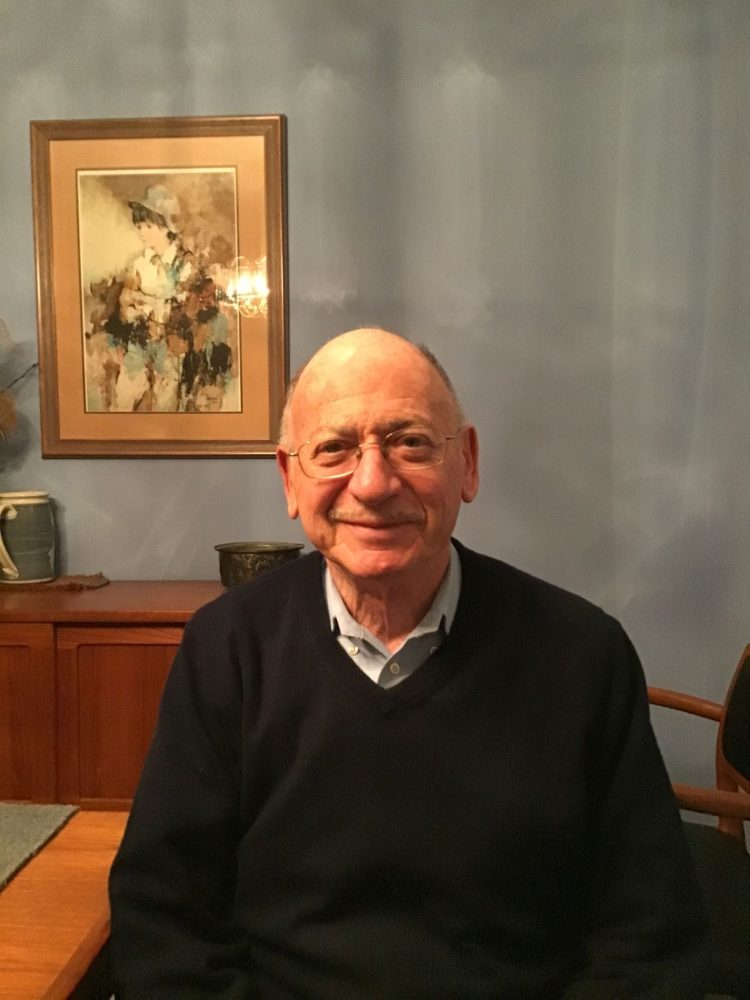
Martin Seltzer (2026)
Interviewer: This interview for the Columbus Jewish Historical Society is being recorded on April 24th as part of the Columbus Jewish Historical Society Oral History Project. We are talking particularly about the Congregation Sukkat Shalom and the interview is being recorded with Marty Seltzer at 3303 Mansion Way in Columbus. My name is Yvonne Burry and we will start the interview now.
Interviewer: Okay, that should pick up your voice. We’ll just…okay, so you are uniquely positioned between both Beth Tikvah and KSS, so, I guess, what we’d like to talk about in the interview today is your involvement in the development of the congregation because Sukkat Shalom is twenty years old now…
Seltzer: Right.
Interviewer: …and we’re doing a group of interviews to mark that historical event.
Seltzer: Good.
Interviewer: Yeah, so please go ahead.
Seltzer: What would you like to know?
Interviewer: Well, tell me about, you know, especially the beginning, how it came to be…
Seltzer: Right.
Interviewer: …how you got involved in it and then you can just kind of go on and look at into your role and memories and just, you know.
Seltzer: Okay. Well, it’s a little, it’s a little tricky now, Yvonne, because there were things going on at Beth Tikvah that probably may be not necessary to talk about them all in great detail…
Interviewer: Yeah.
Seltzer: …but there were things going on at Beth Tikvah that concerned a group of us and we, we were meeting originally to discuss how we could alter whatever these, these activities were to make them more feasible. We thought that they were not feasible. We thought we could try to work out some ideas that would make it, the project more feasible so, that’s how we started. It was just a group of Beth Tikvah people who gathered together to talk about how we could improve or alter things at Beth Tikvah a little, okay, and over time, I guess some people, there was some frustration and we didn’t seem to be making any headway and at some point, some people had the notion in their head, “Well, why don’t we just start our own little minyan, right?”
Interviewer: Yeah.
Seltzer: …and so, that happened. A group just got started. We started meeting and having services, all volunteer stuff, and so that was the initiation of it. Some of us, including me, never left Beth Tikvah. We just maintained our membership at Beth Tikvah but we also became involved in the Little Minyan…
Interviewer: Yeah.
Seltzer: …and then so that would have been the initiation of what and this was in the what, this was 2006, I guess. This is the twentieth anniversary so it would have been 2005, 2006 when all this was happening…
Interviewer: Sure.
Seltzer: …and eventually, the situation at Beth Tikvah resolved itself, like, to my satisfaction anyway, and so, and I had been a member of Beth Tikvah more than, for about forty yeas when all this was going on so I had all my friends were at Beth Tikvah, people my age and so I maintained my membership there and when things got resolved, that was where my predominant religious affiliation was…
Interviewer: Okay.
Seltzer: …but, but since the founding of what is now Sukkat Shalom, I’ve been a member and a supporter and in the early days participated in meetings and the board and what-not, and so I have sort-of a dual, a dual membership.
Interviewer: Did you ever take a leadership role with Sukkat Shalom?
Seltzer: Well, I was on the whatever the, I don’t know if they call it a board but whatever we, the equivalent of our board. I did have some role, but not, not the leadership role, not being in charge of the activities that were going on. My daughter, who happens to be a very active member at Sukkat Shalom, has been much more involved and still is.
Interviewer: We have interviewed her.
Seltzer: Yeah, right, so you know Debra…
Interviewer: Yes.
Seltzer: …and you know she has been a committed person, who did leave Beth Tikvah and has devoted all her energies to Sukkat Shalom.
Interviewer: Okay, so maybe at this point, what would be wonderful for the interview, would be if you have just some stories, just, you know, how people when they start talking about things historical say, “Oh yeah, you know, I remember when,” and just stories that naming names, who was involved, what they, what they did, you know, maybe the first Passover, or High Holidays, or how your practices within the Little Minyan evolved.
Seltzer: Well, I’ll try, Yvonne, my best. My memory, at this point in life my memory isn’t quite as good as it probably should, would have been, but, you know, in the very early days, well, first, almost from the beginning, once we got established as a group, even though it wasn’t, you know, sort of a, I don’t think we were a recognized congregation or affiliated, people, you had to join our little group, so there were people who had never been members of Beth Tikvah who, who heard about us and liked what we were doing. It was sort of a Reconstructionist type of a service, you know. It was a little more Conservative than many Reform but totally egalitarian and there were people who had come into town who, who had that kind of background and so they joined us…
Interviewer: Yeah.
Seltzer: …and they became very important people but it was still all volunteer. Services were led by, by our, our members and we had some very well-qualified members. Several from, from Beth Tikvah that stayed at the Little Minyan, took active leadership roles, and maybe you’ve heard. I mean, Jessica Shimberg particularly was…
Interviewer: I’ve talked to her.
Seltzer: …was very involved, and was, and there were several others. It turned out two or three of them were interested in kind-of taking on rabbinic responsibilities and there were no paid staff at all in the first days. The dues must have been very nominal, because there were no, no one was paid to do anything and probably the first controversies I can remember were about that situation, whether we should start trying to pay, and I think it was specifically Jessica, for doing rabbinic duties. Early on, after we became affiliated, we became a group, Jessica started going to rabbinic school. It was from a distance, but she was going and some of us wanted Jessica to kind-of get a role as our, as our part-time rabbi and pay her for it and there were some people who were adamantly opposed to the notion of this being anything but a volunteer group. No one should be paid for doing anything and that created some bit of a problem and some of those early people left because of it, I think. I can name the Singers. I recall the Singers who left and there were several others, so that was a bit of a controversy, but it settled down and in those early years we did pay Jessica some fairly small amount to lead services. Eventually, and I don’t know just how it happened, we did become affiliated with the Reconstructionist Movement and I think, the congregation is part of the Reconstructionist organization and we got a little bit of help from them, I believe. As far as the activities that were going on, I know there was at least one retreat we had and I can’t remember too many of the details about it, but we did away at one of the state parks here.
Interviewer: When was that, approximately?
Seltzer: It would have been fairly early on, maybe, you know, 2008 to 2010, in there somewhere.
Interviewer: Okay.
Seltzer: What else?
Interviewer: What did you do at the retreat?
Seltzer: It was so long ago. I mean, it was just some fun stuff and some discussion stuff, but I can’t tell you details.
Interviewer: So, you were sort-of trying build the congregation together.
Seltzer: Right. It was I think, more that sort of a purpose. At some point, we began to have a community seder and I think they still, they still do. I have been to a few of them but not so many, and we were meeting – you may have heard more about it than I can remember. We were meeting at an OSU facility right off High Street, right near the campus, just on the north side, and we met there for a while. Maybe once a month, there would be meetings of the whole community whoever wanted to show up and to talk about, you know, a constitution which eventually got established and you know, people to serve in various roles and they went on for some number of years and at some point, we, we met out here in Upper Arlington. I think it was an Episcopalian Church and had our services there. They were very generous with, you know, letting us use space at a nominal cost again, and that worked very well until even some time later it was obvious that many of the membership were from, lived in the Clintonville area on the north side of Columbus and it was, maybe a little bit more of a trip. I don’t remember just why to get out to Upper Arlington and checked with the Unitarian Church and God bless them, they, of course, have always been welcome to Jewish activities. I mean, even when Beth Tikvah was a tiny organization we had Holiday services at the Unitarian Church. I mean, that would have been in the Seventies or whatever, so they, they’ve taken on Sukkat Shalom and offered them space and a sanctuary and that’s where the meetings are held now, you know, regularly…
Interviewer: Right.
Seltzer: …so there have been bar and bat mitzvahs over the years. My granddaughter Tova, Debra’s daughter, was bat mitzvah-ed at the Unitarian Church and there have been others, and so they have pretty much a full slate of activities that I guess that go on. I mean, they’re not extensive. There’s, the membership is still, what, I’m not sure exactly what it is now, forty or fifty units or so, and…
Interviewer: I think that’s pretty close.
Seltzer: …and there’s some wonderful people who are active. Joanie Calem especially.
Interviewer: Yes.
Seltzer: Maybe you know Joanie. She is an amazing person and a gifted singer and song-leader and what-not, and she’s done a terrific job. Oh, I’m trying to think of some of the people, the guitar players that we have. This is terrible. I should give them credit. There was, he worked at OSU and then retired…Bill, Bill, Bill, Bill…
Interviewer: Cohen.
Seltzer: Thank you, Dear. Bill Cohen and his wife were involved and active and so….
Interviewer: Yeah.
Seltzer: …thanks, and at this point, they seem to have a nice strong group of younger people. There aren’t, I don’t think there are so many people even approaching my age, so I’m not so, it’s…
Interviewer: It’s a younger congregation.
Seltzer: It’s younger. It is and that’s wonderful. That’s fine but as I started out the conversation, my old friends, the ones that are still around, are all at Beth Tikvah, so my interest and my involvement are mostly at Beth Tikvah.
Interviewer: So, when it comes time for something like High Holidays, you would go to Beth Tikvah or you would go…
Seltzer: Yeah, so, there’s a…
Interviewer: Both?
Seltzer: Yeah. I might go to the first night at Sukkat Shalom. They always have a lovely service, and then the day services at Beth Tikvah. Yeah, so I have gone most years, maybe every year, to at least one Holiday service at Sukkat Shalom and occasionally there’s a Torah study group at Sukkat Shalom. It’s very small. It’s Cheryl Lubow and usually my daughter Debra and a few other people, but occasionally I participate there. I’m very active at Beth Tikvah in Torah study, and, I mean, every week, but last week I did go to the one at Sukkat Shalom, as well, so, Saturday morning at Beth Tikvah. Saturday afternoon at Sukkat Shalom and it’s a small group, and again, just volunteer, but you know, they keep going.
Interviewer: Still very satisfying.
Seltzer: Yeah. Right.
Interviewer: What do you think the strengths are of Sukkat Shalom at this point?
Seltzer: Well, the membership, the folks who are members, many of them have a good rich solid Jewish background and can take care of things without the need for paid staff, you know. I mean basic things and they do that very well and so, they’re, they’re well educated and there are some who are very dedicated and are willing to take on these leadership roles which are challenging, you know, without having paid staff to help.
Interviewer: Sure.
Seltzer: Now they have Jodi apparently now is doing some work.
Interviewer: Yes.
Seltzer: You’re familiar with it, so, that’s a big help I’m sure. So, yeah, the strengths are young people, some of them very active and some of them with very good religious backgrounds, and I think, a diversity of backgrounds. I mean, this is not a group that came from Reconstructionism.
Interviewer: Yeah.
Seltzer: Some came from Reform. Some came from Orthodoxy. Some came from Conservatives so there’s a whole mix.
Interviewer: And maybe more so than a congregation would likely be?
Seltzer: Yeah, perhaps. Perhaps and probably more so than at Tifereth would be or Temple Israel out on the East Side…
Interviewer: Okay.
Seltzer: …yeah, where you have a choice of any of these places, and, you know, so.
Interviewer: Okay. What else about the congregation do you think would be good to capture in terms of a historical viewpoint?
Seltzer: What else.
Interviewer: Where are they going? What do you think is going to happen? Do you think they’re sustainable? Likely to grow? What direction would, you know, would that be?
Seltzer: That’s an interesting question. I think, well, growth has been slow but apparently, it’s been happening. I mean, there were at some point thirty units. I think there are more than that now. I’m not so involved that I know all the details, but I think there’s been some slow growth that’s perhaps, for some people, it’s a question of economics. Their membership fees are not substantial, you know, compared to most of the other synagogues in town, including Beth Tikvah. Now Beth Tikvah and all the others, I’m sure, have policies about accepting folks who can’t afford to pay the full amount, but it might be attractive to people not to have to deal with, you know, pleading poverty or whatever and …
Interviewer: Sure.
Seltzer: …so, that’s a good feature, and if they live in the community, it’s vey convenient, and in some cases, I don’t know if this would be important but, often when there are mixed marriages, they find places like, Sukkat Shalom more comfortable than they might at one of the synagogues on the East Side.
Interviewer: Yeah.
Seltzer: And people like it. You know, they probably love having their kids going to these little groups with Joanie, and having all the singing that she does. It’s a bit of a challenge for significant growth for them, I think because, one of the reasons certainly is Beth Tikvah is on the North Side and it’s a large congregation now. We have five hundred families, two rabbis, young rabbis who love kids. We shouldn’t get too much into Beth Tikvah but just for the point of view of why growth may not be particularly rapid, there is serious competition on the North Side of Columbus for another congregation with liberal, we both essentially have liberal outlook on life…
Interviewer: Yeah.
Seltzer: …so, I don’t know, you know, if they get many members from Arlington or Worthington or Dublin or the communities a little further out which are attracted to Beth Tikvah.
Interviewer: So, okay but it’s still pretty strong in terms of attracting some people in Clintonville and that part of the city.
Seltzer: Yeah, and certainly, there are people, there are Jewish, young Jewish people who are attracted to a small operation, a small group. I mean, at one time that’s what Beth Tikvah was. When we first joined it, it was forty families and it was wonderful, so, there were, I’m sure young people who have similar attitudes that I did in 1966.
Interviewer: So, are you a charter member of both congregations?
Seltzer: Well, not quite a charter member of Beth Tikvah but awfully close.
Interviewer: Awfully close. Yeah.
Seltzer: It was just getting started when Mickey and I joined. It was a very small. We lived, we had our services in a house on North Broadway and High Street.
Interviewer: I remember that.
Seltzer: Do You? You remember that?
Interviewer: I do. I know where that is. You’re on Indianola.
Seltzer: Oh, no, that was the second one.
Interviewer: Oh, the second one. Alright. I know the one on Indianola.
Seltzer: Yeah. Right. Right. That was, if you remember that, that goes back pretty far.
Interviewer: It does.
Seltzer: But the first place was just a little, literally a little house…
Interviewer: …little house, okay.
Seltzer: … on the corner of North Broadway. That’s when we joined, so, yeah, but we go back pretty far.
Interviewer: Oh, my goodness. Does Sukkat Shalom attract any University students?
Seltzer: I think they do get students coming, especially on the Holidays. I’ve seen young people I’m sure were students.
Interviewer: I know there’s activity on campus as well, but this is an alternative.
Seltzer: It is, for sure, and I think that it attracted some people from some towns further away, like Yellow Springs.
Interviewer: Oh, sure.
Seltzer: I remember there was a group coming from Yellow Springs that were interested. There may be some others that I’m not so familiar with because I haven’t been participating actively but there have been small groups of young Jewish, I think young Jewish people generally who somehow heard about it, maybe through, maybe they grew up as Reconstructionist Jews and this is the only place for a Reconstructionist Jew to, you know, feel at home.
Interviewer: It’s the only Reconstructionist congregation in Columbus at this point.
Seltzer: Right. Right, and they also, we also have an affiliation with the New Jewish Agenda which is another sort-of, you know, small group that may, that may have a following nationally and if people come here to move to Columbus and hear about it, they might want to join…
Interviewer: Yeah.
Seltzer: …so there may be some attraction. These are not huge denominations…
Interviewer: Right.
Seltzer: …so you know, it’d be surprising if they got a whole lot of people from, for those reasons but they are, they do exist and those people who had been in Washington or New York or wherever and participating as Reconstructionist might just want to join Beth Tikvah [corrected himself] Sukkat Shalom for the same reason, so it might grow. I think that they’re pretty stable from what I can see. The congregation is pretty stable at this point. I know we’ve gotten involved in this Life and Legacy program that’s been really important and a number of people have, have committed themselves to.
Interviewer: Do you want to talk a little bit about what that is?
Seltzer: Well, it’s being done in, maybe in every congregation in town, but an effort to, it’s sort of an effort to, to get members to make some sort of a pledge that they will in some way either leave some money or give some money for to sustain whatever congregation they’re in…
Interviewer: Yeah.
Seltzer: …so, Beth Tikvah has a very active program going on. In fact, there’s a service tonight and a dinner for our Life and Legacy program but Sukkat Shalom did get to participate and I think it was organized by Jewish Columbus and I’m pretty sure that there were a reasonable number of people who were members of Sukkat Shalom, including me, who have made some sort of a pledge to support the congregation financially in some substantial way.
Interviewer: Yeah. It’s a wonderful program. Any other recollections, anecdotes you can think about from your years of involvement?
Seltzer: Yeah, there were, certainly in the early days, controversies. Some of the people who joined, some of them I think who hadn’t been members of Beth Tikvah, had strong views about how we should go forward, how Sukkat Shalom that was still the Little Minyan should go forward. Even the name change, I think, was something that may have been a little controversial. You know, some people may have wanted to stick with the Little Minyan and not get fancy and not become affiliated, but I think, by and large, those, those sort-of early controversies worked their way, worked themselves out, and as you know I haven’t been so involved in the past ten or fifteen years so I’m not as, not as important a person to be talking to about what’s going on and what has been going on in recent years. I really get there just, you know, a handful, maybe two handful times a year whereas at Beth Tikvah, I’m there every week almost.
Interviewer: Yeah. Okay, anything else you can think of?
Seltzer: Well, I don’t, no. No. I think that’s covered as much as I can recall. If my mind was triggered there might be some other things but I just can’t.
Interviewer: Okay, so I will close by saying on behalf of Columbus Jewish Historical Society I want to thank you for contributing to the Oral History Project and that concludes our interview.
Seltzer: Thank you.
Interviewer: Yes.
Seltzer: Well, I hope that was at all useful. People like Debra can sure tell you a whole lot more.
Transcribed by Linda Kalette Schottenstein, July 24, 2026